Film Screening: The Social Life of Small Urban Spaces
-
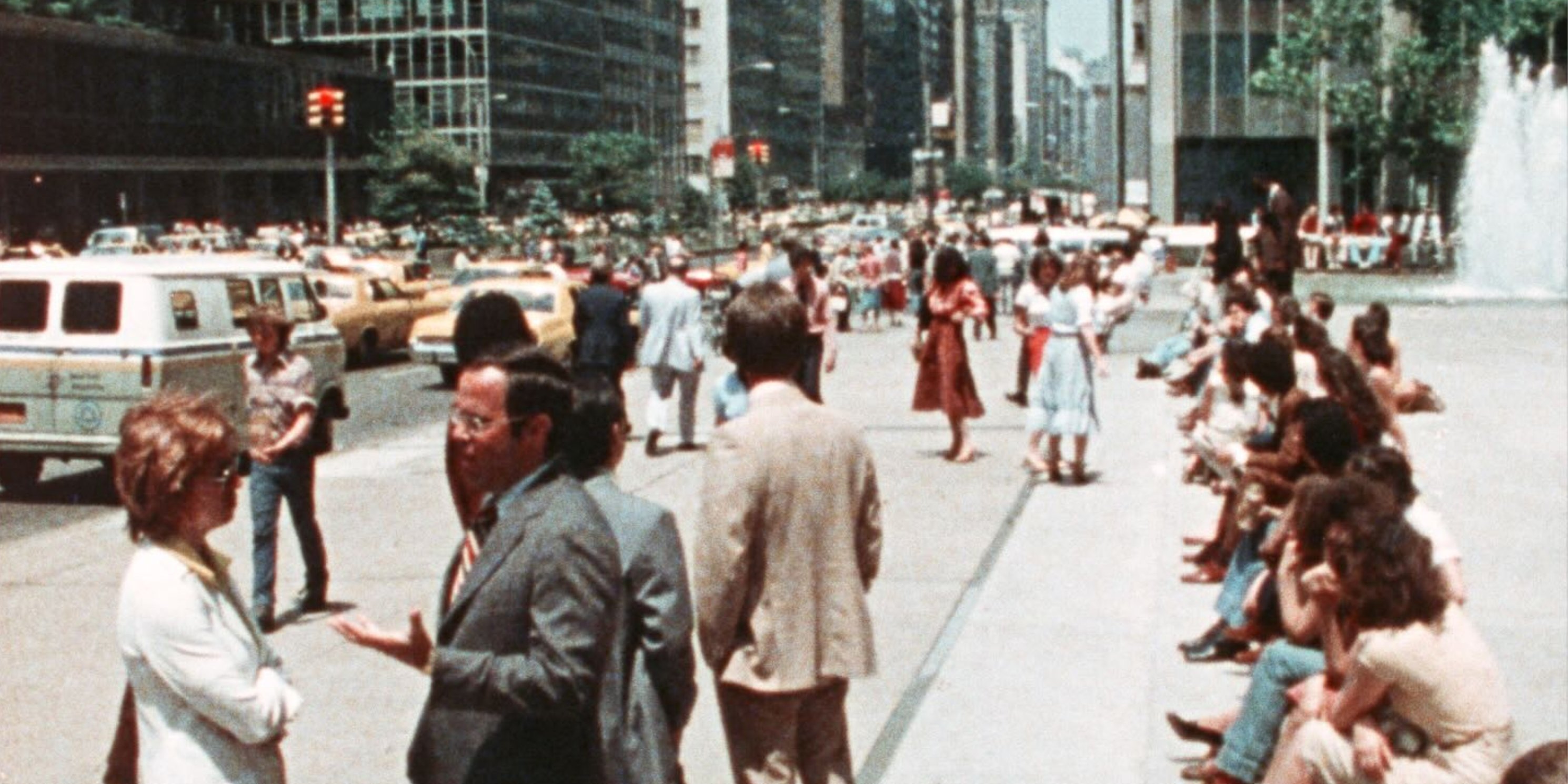 Stills from "Social Life of Small Urban Spaces" by William H. Whyte. Photo: Anthology Film Archives.photo 1 of 3
-
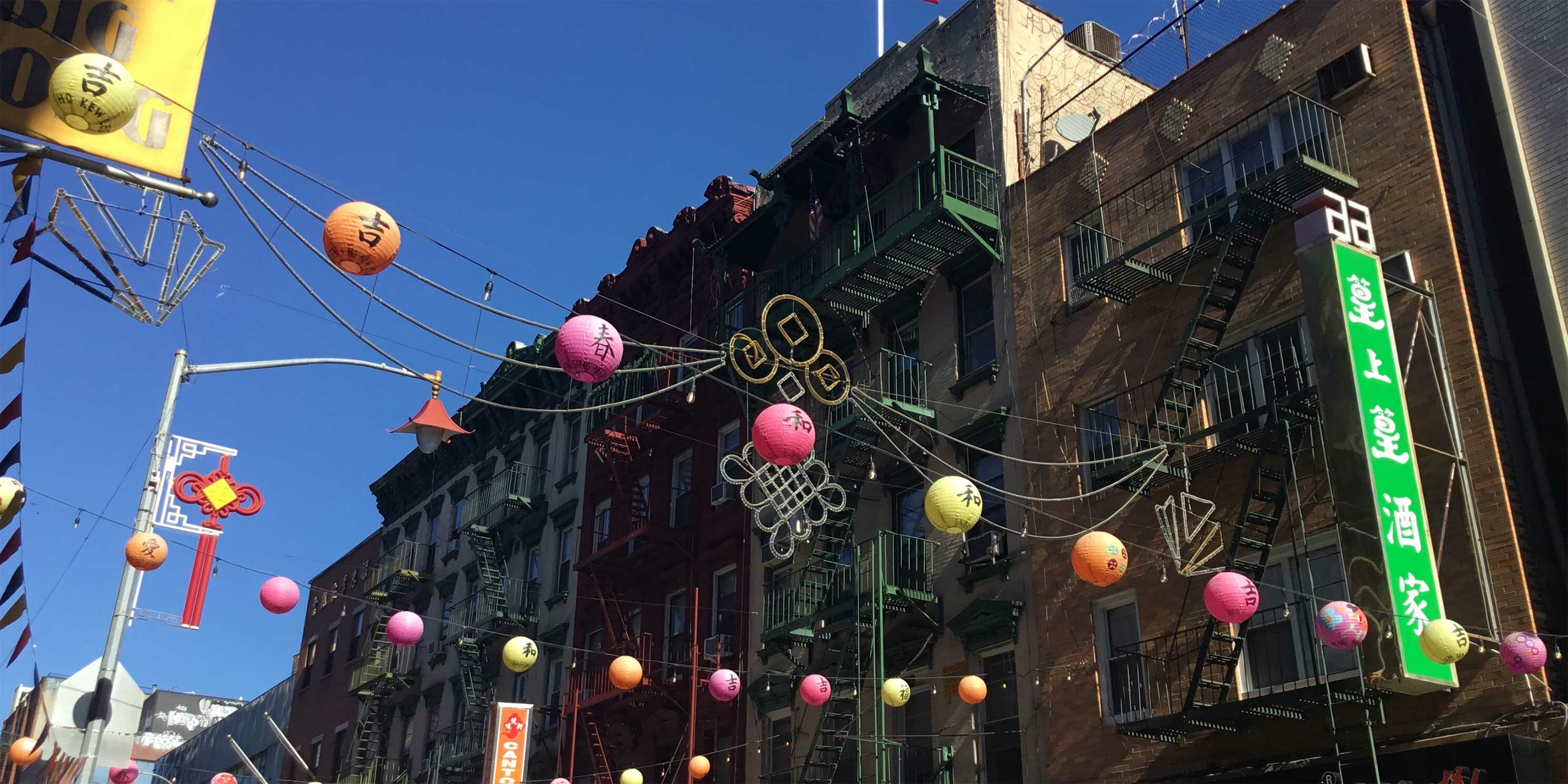
 Still from "Social Life of Small Urban Spaces" by William H. Whyte. Photo: Anthology Film Archive.photo 2 of 3
-
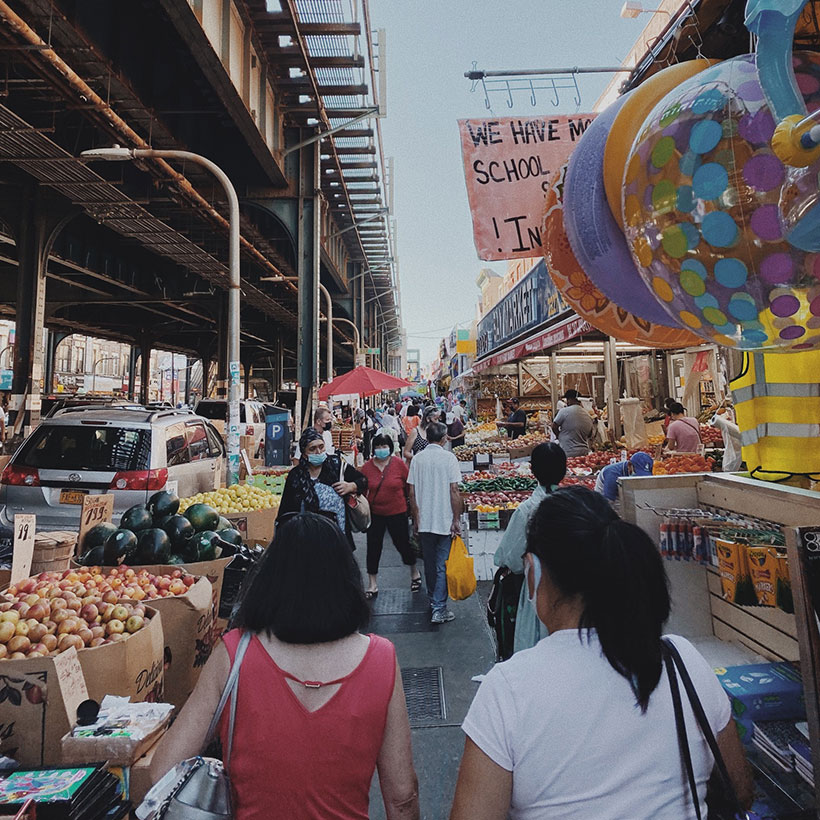
 Still from "Social Life of Small Urban Spaces" by William H. Whyte. Photo: Anthology Film Archive.photo 3 of 3
“William Whyte is a legendary people watcher who likes to study the subtle ways public space is used. I think about this film constantly whenever I’m out shooting.”
– John Wilson, director of The History of Concrete
About the Film
In 1980, the urbanist, sociologist, city planner, and writer William H. Whyte published a book based on the fruits of many years of research and observation into pedestrian behavior and city dynamics, conducted as part of his Street Life Project (which operated under the umbrella of the New York City Planning Commission). The result, The Social Life of Small Urban Spaces, closely analyzed the functioning (or malfunctioning) of public spaces in various cities, above all in NYC. The book quickly became a classic text within the realm of city planning, and remains beloved not only for the perceptiveness, elegance, and wisdom of its insights into the ways city dwellers interact with the urban environment, but for its disarmingly unpretentious, no-nonsense, and often flat-out funny tone. Though the book is familiar to generations of teachers and students of urbanism and city planning, the project is not widely known outside those circles. Perhaps even less well known—but hopefully not for long—is that, as a supplement to the published text, Whyte simultaneously produced an hour-long film of the same name.
The film version of The Social Life of Small Urban Spaces fully embodies all the qualities of the book: its intelligence, its empathetic, common-sense insight into what makes a city truly work for its residents (in contrast to the grandiose, often authoritarian instincts of architects, politicians, and developers), and its gentle yet often pointed wit. The film also boasts its own, unique qualities. Unlike the book, the film is graced by Whyte’s own voice: sounding very much like Jimmy Stewart’s city planner cousin, Whyte delivers the narration with a lack of polish and an often-self-deprecatory folksiness that’s charmingly at odds with the stentorian tone of most educational films. The film is also effectively a work of street photography. Though it was produced as a kind of filmic report and a pedagogical tool, Whyte and his team’s dedication to observing – and recording – the actual behavior of city dwellers, and their sharp eye for the behaviors and gestures that are most revealing of city life, result in a film that is—almost incidentally—a classic city symphony. Taking place primarily in New York (with brief detours to Chicago, Houston, Los Angeles, and other urban centers), The Social Life of Small Urban Spaces is one of the great films about that strangest of creatures—the city dweller—in its natural habitat.
One of the few “civilians” who have appreciated and celebrated the film in recent years is filmmaker John Wilson, who programmed it during a carte-blanche at Anthology in 2023. We were so enamored with the film—which at that time was only available in a very poor-quality video transfer—that we embarked on a quest to locate better elements. In collaboration with Project for Public Spaces (an organization that grew out of Whyte’s Street Life Project) and the Municipal Art Society of New York (which acted as the film’s initial distributor and where Whyte was a board member), we have managed to restore the film.
Text courtesy of Anthology Film Archives
Speakers
John Surico Executive Director, Friends of the QueensWay; co-author, CROWDED (2029)
John Surico is a writer, researcher, and practitioner focused on mobility and public space. He serves as the first-ever executive director of Friends of the QueensWay, an effort to build a linear park along an abandoned rail in Queens, and teaches cities-centric reporting at his alma mater, NYU’s Arthur L. Carter Journalism Institute. He is the co-author of two forthcoming books: Quick-Build City (2027), written with Mike Lydon and Tony Garcia; as well as CROWDED (2029), written with Winnie Hu. And at home, in Astoria, Queens, where he lives with his partner (Angela) and cat (Kita), he helps advocate for livable streets as the chair of the 31st Ave Open Street Collective, a pop-up weekend public space. He holds an MSc in Transport and City Planning from University College London’s Bartlett School of Planning.
Matt Thibodeau Urban Planner, Municipal Art Society of New York
Matt Thibodeau is an urban planner at the Municipal Art Society of New York, working across public realm, housing, and planning initiatives. He is a recent graduate of the Master in Urban Planning program at the Harvard Graduate School of Design, where he concentrated in urban design and completed research fellowships with the Joint Center for Housing Studies and the Boston Housing Authority. Prior to transitioning into urban planning, Matt served as director of communications for a prominent civil rights law firm based in Chicago. He holds a Bachelor of Arts in political science and French/francophone Studies from Carleton College and originally hails from Duluth, MN. Matt currently resides in Brooklyn.
Enduring Culture, a multivocal historic preservation vision for New York City
Related Initiatives
Supporting, celebrating, and preserving diverse cultural heritage throughout NYC